


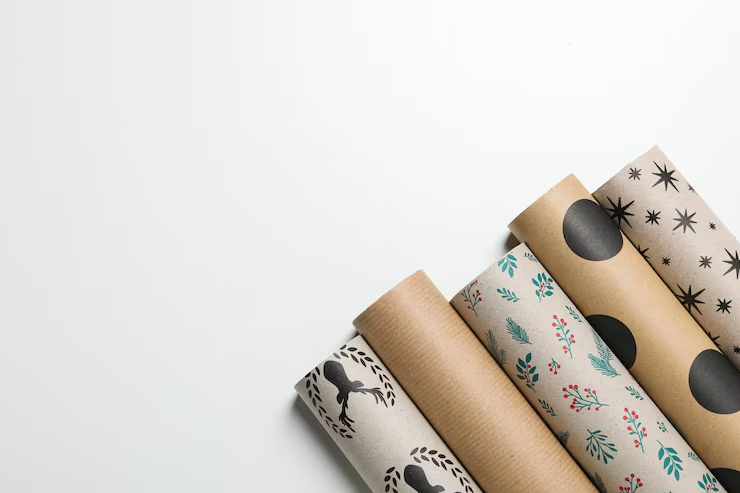
The future of gift packaging will rely on wrapping paper tubes as its primary solution.
Modern consumers expect more than basic protection from their gift packaging because they now expect statements from their products. People who buy gifts today focus on three essential factors which include appearance and sustainability and practicality before they start unwrapping their presents. The market requires packaging solutions which achieve their best combination of stylish design and functional benefits and environmental sustainability. The future of gift packaging will depend on wrapping paper tubes because they offer modern durability and flexibility.
The modern design of wrapping paper tubes provides better protection than conventional wrapping paper and flimsy plastic materials. These tubes provide excellent value because they protect items during shipping while offering high-end design and creating a positive unpacking experience. The tubes serve high-end gifts and boutique items and eco-friendly consumer products by fulfilling both brand and customer requirements.
1. Strong Protection and Reliable Structure
Why Protection Matters in Gift Packaging
Standard wrapping paper fails to protect items because it tears easily and wrinkles and does not protect against knocks and pressure. The production of wrapping paper tubes involves thick paperboard materials and multi-layered cardboard which provides excellent protection. The design structure delivers three fundamental advantages to users.
-
The packaging system protects sensitive items from damage when they are being transported.
-
The packaging system maintains its integrity when facing external pressure and small accidental drops.
-
The packaging system protects items from dust and light moisture exposure.
The packaging system protects delicate items during shipping and provides reliable protection for candles and cosmetics and rolled textiles and artwork and other fragile products. The packaging design maintains its structure during transportation which results in lower package damage and better customer satisfaction.
Long-Term Shape Retention
The design of tubes maintains its original shape after use. The rectangular shape of boxes and soft mailers causes them to collapse but tubes maintain their original form.
-
The storage process becomes simpler because tubes can be arranged into a small stacked formation.
-
The product display on retail shelves stays organized because of tubes.
-
The product maintains its attractive appearance after customers handle it.
The tubes become useful storage containers which customers use for their belongings after they finish using them as gift packaging. The tubes provide additional value to customers because they can use them for storage or decoration purposes.
2. Premium Unboxing and Brand Perception
Creating a Memorable First Impression
The first physical experience of a present happens when you touch its outer packaging materials. The rigid structure of tubes creates an impression of high-quality products because they differ from standard square boxes.
The tube design enables brands to display their branding and designs through its smooth exterior surface.
The act of taking off the lid or end cap serves to create meaning while showing absolute dedication to every aspect of the process.
The premium unboxing experience of tubes allows brands to show their products as luxury items through unmodified product contents, especially when paired with luxury tube packaging.
People choose to reuse tubes because these objects appear both durable and attractive to the eye.
-
People use tubes to organize their stationery and cables and their small accessories.
-
People use tubes as decorative containers to display their items on their desks and shelves.
-
People use tubes to package their gifts for future distribution.
The tube design allows customers to show their brand logo and design elements during their daily activities which makes the package last longer than its first use.
3. Versatility Across Sizes and Product Types
Adapting Tubes to Different Products
The market demand for tubes continues to rise because these products enable the production of products with various dimensions and shapes.
-
The packaging solution works well for long items including posters and prints and textiles.
-
The packaging solution works well for round products including candles and jars and small bottles.
-
The packaging solution works well for sets of smaller products which can be placed inside the tube.
-
The packaging solution works well for soft goods which need to be placed inside the tube after rolling or folding.
The small paper tubes serve as excellent solutions for packaging compact items. The product stays protected inside the tube while the tube keeps its professional appearance during shipping.
Flexible Dimensions and Closure Styles
Brands have the ability to modify their tube packaging through diameter and length adjustments and wall thickness selection and closure system selection.
-
Brands have multiple tube size options and wall thickness choices to find the right protection level for their needs.
-
Brands can select from different closure options which include plug lids and metal ends and paper caps.
The flexible design of tubes allows businesses to develop personalized packaging solutions which fulfill product needs and preserve brand identity.
4. Sustainability and Reduced Waste
Moving Away from Single-Use Wrapping
People throw away traditional gift wrap right after they finish unwrapping their presents. The recycling process faces difficulties because gift wrap materials include foils and glitters and plastic films. The production of wrapping paper tubes from paperboard materials provides better sustainability than traditional wrapping paper.
-
The packaging material consists of recyclable materials which extend its lifespan through reuse.
-
The packaging material extends its lifespan because it can be reused multiple times.
-
The packaging material serves as a substitute for bubble wrap and foam because it provides better protection during shipping.
Brands that use tubes for their packaging operations will decrease their single-use waste output during gift-giving activities.
Environmentally Responsible Material Choices
The production of tubes uses three main materials which include recycled paperboard and kraft paper with natural appearance and water-based adhesives and minimal ink usage.
The packaging solution helps brands show their environmental commitment through their packaging efforts. People now inspect the packaging materials of their purchases before examining the contents because sustainable tubes fulfill their expectations.
5. Customization and Brand Differentiation
Visual Space for Design and Storytelling
The extensive design capabilities of tubes become possible because their large surface area exceeds what standard labels and small tags can offer.
-
The tube design allows brands to place their logos and brand names in visible positions which customers can easily observe.
-
The tube design enables brands to display their illustrations and patterns and seasonal graphics which create a visually appealing effect.
-
The tube design structure allows brands to create an organized system for presenting product information that users can easily understand.
The tube design functions as a small advertising billboard which enables brands to showcase their products through customized designs.
The tube design supports various finishes which include matte and gloss lamination and foil accents and embossed elements and spot finishes.
The additional design elements on tubes enable brands to create gift-ready packaging which eliminates the need for additional wrapping materials during store operations and home use.
6. Practical Benefits for Storage, Shipping, and Operations
Efficient Handling for Businesses
The logistics operations benefit from wrapping paper tubes because they provide efficient handling processes.
-
The warehouse storage process becomes more efficient through the implementation of automatic tube systems which create organized stack formations.
-
The round shape of tubes protects them from corner damage that occurs during transportation.
-
The packaging weight remains lower than heavy rigid boxes which provide equivalent protection.
The shipping process becomes more efficient because tubes reduce packaging failures which leads to reduced shipping expenses for online orders that need to pass through various handling stations.
Easier Planning and Scaling
Standard tube sizes simplify all aspects of ordering and storage and packing operations.
-
The packaging process becomes simpler for staff members because they can use one method to pack various product lines.
-
Standardized tube sizes enable more efficient inventory management because they reduce the complexity of the process.
-
The process of working with big unit batches enables better prediction of packaging expenses.
Brands that already use wrapping paper tubes for their packaging operations discover that this consistency helps them plan better and handle seasonal demand more effectively.
7. Future-Ready Gift Packaging for Changing Markets
Aligning with Shifting Consumer Expectations
The market shows increasing interest in three main areas which include waste reduction and reusable and recyclable materials and special yet unobtrusive gift packaging.
The design of wrapping paper tubes fulfills present consumer needs because it provides sustainable packaging options which customers can reuse.
The tubes function as protective elements which unite fashionable design with operational capabilities and environmentally friendly characteristics.
The packaging solution offers businesses flexible options which help them build their brand identity while expanding their business operations.
The tube design structure allows businesses to launch new products by using their current tube packaging systems.
Special edition products can use unique artwork designs on standard tube formats.
High-end products can switch to luxury tube packaging without requiring any changes to their product design.
The tube design meets current regulations while giving businesses the ability to pick packaging types that fit their growing product lines and changing brand designs.